Volume 2 - Issue 7
The decisions, discipline, and systems that determine what scales
A Message from Matt
There’s a moment I often see when leadership teams review a clickable prototype.
The conversation slows down.
Not because everyone agrees—but because the work gets more serious.
Tradeoffs become visible. Ownership gets clearer. The implications feel real.That moment matters. And it’s also where many teams misunderstand what comes next.
A prototype creates clarity.
Approval authorizes investment.
Neither guarantees confidence in production.Once a prototype is approved, leadership decisions shift. The question is no longer “Should we move forward?”. It becomes “How will this be delivered, who owns it at launch, and how will risk be governed once it’s live?”.
Those choices—delivery model, accountability, and stewardship—determine whether momentum holds or quietly erodes.
This issue of Streamline & Scale focuses on what strong leaders do after the prototype: how they convert alignment into accountable delivery, choose structures that fit their organization, and build confidence that holds up once real users and real data are involved.
If your team is navigating that transition—from clarity to commitment—I’d welcome the conversation.
Warm Regards,
Matt Strippelhoff
Partner, CEO/CRO - Red Hawk Technologies
Short on time? Listen to our summary podcast that focuses on the highlights of Issue 7.
What’s in This Issue
This issue focuses on three leadership decisions that surface once clarity arrives:
- What decision the prototype actually equips you to make—build, refine, or pause—with intent instead of momentum
- What responsibility begins after approval—and why production confidence must be designed, not assumed
- How AI can accelerate delivery without eroding trust—when discipline and visibility come first
Unifying insight: The work that determines what scales doesn’t happen during the prototype build.
It happens in the decisions—and systems—that follow.

After a prototype, the most important work isn’t building—it’s deciding what comes next.
1. After the Prototype: Choosing the Path That Actually Serves the Business
A clickable prototype isn’t a green light.
It’s a decision gate.
By the time leaders are clicking through a prototype, uncertainty has largely done its job. Ideas are tangible. Tradeoffs are visible. Alignment feels real.
What follows is where leadership shows up.
In practice, teams land in one of three places after a prototype review: ready to build, needing refinement, or choosing to pause. All three are successful outcomes—when they’re intentional.
Takeaway: Prototypes reduce risk by sharpening judgment, not by promising success.
👉 Explore how leaders decide what comes next after clarity arrives
Three Paths After the Clickable Prototype

After prototype approval, leaders choose delivery models that determine ownership, accountability, and long-term confidence.
2. Approval Is a Milestone. Confidence Is a Responsibility.
Approving a prototype is decisive—and incomplete.
It confirms direction and authorizes investment. But approval does not define how production will be delivered, who owns accountability at launch, or how risk will be governed once the system is live.
Those decisions come next—and they matter just as much.
Production introduces real exposure: operational ownership, dependencies, security risk, and change over time. None of that is visible in a prototype. And none of it resolves itself.
Teams that sustain confidence treat production as a lifecycle, not a milestone. They choose delivery models deliberately, define accountability early, and govern systems intentionally once real users and real data are involved.
Takeaway: Approval starts the responsibility—it doesn’t finish it.
👉 See how leaders move from approval to production confidence.
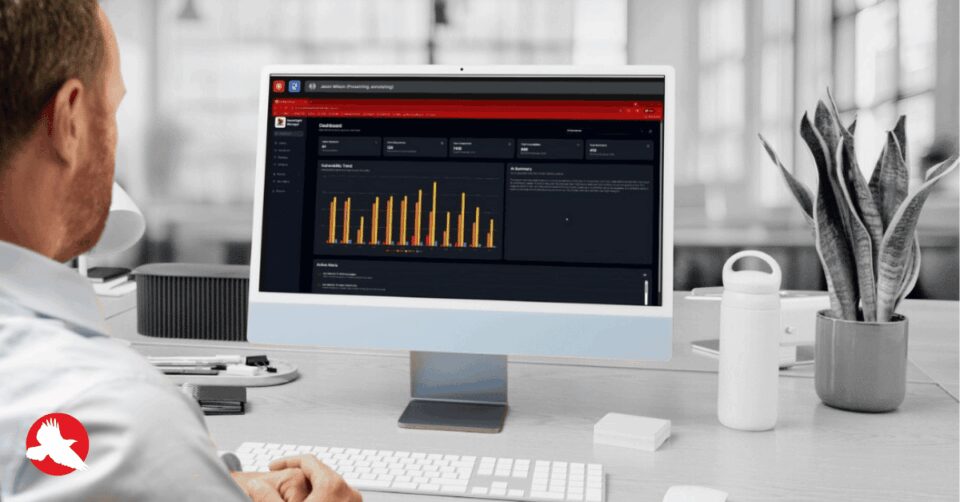
Red Hawk SCA’s new dashboard provides real-time visibility into component vulnerabilities, trends, and automated remediation workflows.
3. AI-First Works—When You Start with Discipline
AI is changing delivery speed. That part is obvious.
What’s less obvious—and more important—is what happens when speed outpaces discipline.
AI creates leverage only when applied inside systems that already value clarity, consistency, and accountability. Used well, it removes friction. Used casually, it simply moves risk downstream.
Takeaway: AI-first isn’t about speed.
It’s about maintaining discipline at higher velocity.
👉 Learn how AI-first delivery scales without sacrificing accountability
Accelerating Software Composition Analysis with Our AI-First SDLC.
The prototype creates clarity.
What leaders do next determines what scales.
WHAT THESE STORIES HAVE IN COMMON
These stories describe the same leadership system—applied at different moments:
- Decide deliberately once clarity arrives
- Structure delivery before exposure begins
- Govern responsibility as systems move into production
This is what Streamline & Scale stands for: aligning people, process, and technology so confidence doesn’t erode after approval—or degrade once systems are live.
STAY CONNECTED
If this issue sparked a conversation, share it with someone facing the same decisions.
And if your team is navigating what comes after the prototype, approval, or launch, we’d welcome a grounded conversation focused on clarity, accountability, and outcomes.
👉 Schedule a grounded conversation about delivery, ownership, and production readiness
Ready to See Your Future Product Before You Build It?
Let’s create a proof of concept you can actually click. Start an AI-First Discovery conversation with Red Hawk Technologies
About Red Hawk Technologies
At Red Hawk Technologies, we're not just building software; we're building partnerships that drive innovation. We understand the unique challenges mid-market companies face when it comes to custom web and mobile application development – the unpredictable costs, the ongoing maintenance headaches, and the complexities of managing long-term projects.
That's why we've revolutionized the industry with our Software Development-as-a-Service (SDaaS) solution. We bundle development, technical support, ongoing maintenance, and future enhancements into a single, predictable monthly fee. This game-changing model eliminates uncertainty, provides financial clarity, and ensures your software evolves with your business, allowing you to innovate with confidence and focus on what you do best.
Ready to Elevate Your Business with Custom Software?
We believe in a partnership that helps you realize the potential of digital transformation. We're an award-winning team with a proven process for on-time, on-budget delivery, focused on helping mid-market businesses like yours achieve significant returns. Our Software Development-as-a-Service (SDaaS) model ensures predictable costs and comprehensive support.
Whether you're exploring a new vision with our Tech Innovation Workshops, seeking robust custom development, or need ongoing support for existing applications, we're here to provide the expertise and predictable partnership you need.
Once you've sharpened your software vision, the next step is transforming that blueprint into a powerful, custom application. We're here to help you bring that idea to life with predictability and precision.
Let's discuss your custom software needs and how our SDaaS model can provide the clarity and stability your business deserves.
Take the next step: Book a consultation to discuss your custom software needs.
We hope you found this first issue insightful. Look out for our next edition, where we'll dive deeper into the strategies for success in custom software development.
Don't miss an issue SUBSCRIBE NOW!

Clarify and Define Your Big Idea
Use these easy-to-follow presentation slides to facilitate your own tech innovation workshop:
- Explore your vision for a new web or mobile app
- Define your goals and audience
- Outline logistics and required technology
- Move toward next steps in making your idea a reality

Download the Presentation
Reach New Heights
Read more articles about custom software development, mobile applications and technology trends from our team.

What Does Your Company Spend on Thinking?

Red Hawk Technologies Named Honorable Mention in 27th Annual Family & Private Business Awards

A Digital Business Twin Turns Your Workflows Into Something AI Can Run