Why behavior—not features—should drive your digital transformation.
The Problem: The "Admin Trap"
For a boutique brokerage firm, the barrier to growth wasn't a lack of deal flow—it was operational drag. Their highly skilled analysts were spending 80% of their day acting as "data janitors": chasing email threads, manually updating spreadsheets, and double-checking requirements.
The result? They were capped at managing 1–2 concurrent projects effectively. Any attempt to scale beyond that led to missed deadlines, overlooked client requirements, and analyst burnout. The CEO knew they needed technology, but he couldn't afford to build a system that just "digitized the chaos." He needed a tool that would fundamentally change how his team worked.
The Solution: AI-First Discovery with a Clickable Prototype
Instead of delivering a 50-page requirements document, Red Hawk Technologies delivered a clickable, high-fidelity proof of concept. This wasn't just a mockup; it was a behavioral blueprint designed to enforce the CEO’s strategic goals.
By putting the prototype in the hands of the leadership team, we proved that AI could do more than automate tasks—it could act as a strategic guardrail.
Here is how the clickable prototype demonstrated the shift from "Task-Taker" to "Strategic Partner":
1. From “What do I do next?” to "Active Prioritization"
The Old Way:
Analysts cherry-picked easy tasks from a cluttered inbox, often letting difficult but critical tasks slide until they became emergencies.
The Prototype Experience:
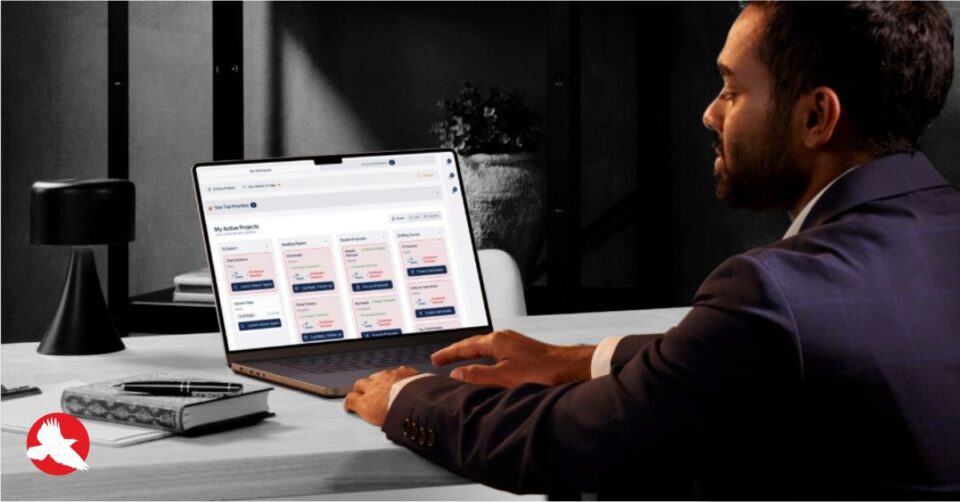
We demonstrated a "Focus Zone" Dashboard. Instead of a passive list, the UI actively suppressed noise and surfaced only the projects requiring immediate attention based on SLA status.
The Behavioral Shift:
The prototype proved that we could force a "first-in, first-out" discipline. The CEO saw instantly that the software would act as a manager, ensuring no deal ever fell through the cracks.

2. From "Manual Review" to "AI-Assisted Guardrails"
The Old Way:
Analysts manually compared dozens of PDF proposals against client requirements. Scope creep (like a client suddenly needing a server room) was often missed until lease negotiations.
The Prototype Experience:
We showcased the Proposal Comparison Matrix . The prototype featured embedded Red/Green Decision Logic.
Visual Proof: If a proposal exceeded the budget, the price turned Red. If it met the budget requirement, it turned Green.
The Behavioral Shift:
The prototype demonstrated how AI could enforce quality control. Analysts no longer had to memorize every requirement; the system flagged deviations for them, ensuring 100% compliance with the client's mandate.
3. From "Lost in the Threads" to "Proactive Scope Protection"
The Old Way:
Critical scope changes—like a client emailing, "Actually, we need 25 desks now"—were buried in long email chains, leading to rework weeks later.
The Prototype Experience:
We demonstrated the AI Smart Inbox. The prototype showed the system scanning incoming emails and flagging a "Potential Requirement Change”.
Visual Proof: The user saw a "Diff" view (Current: 20 Desks vs. Detected: 25 Desks) with a single button to "Update Requirements."
The Behavioral Shift:
This was the "aha!" moment. The prototype proved the system could protect revenue by catching scope changes in real-time, allowing the analyst to update the search parameters immediately rather than days later.

The Outcome: De-Risking the Future
By the end of the engagement, the CEO wasn't looking at a spreadsheet of estimated costs; he was clicking through the future of his company.
The clickable prototype proved that his team could realistically scale from 2 to 6+ concurrent projects. It validated that AI could handle the administrative heavy lifting, freeing his analysts to focus on negotiation and client service.
Most importantly, it de-risked the investment. The CEO didn't have to hope the software would change behavior—he had already experienced it.
The Takeaway
In 2026, a static plan isn't enough. If you want to transform your business operations, don't just ask for a proposal. Ask for a clickable prototype. See the behavior you want to drive, validate the AI that will power it, and know exactly what you're building before you write the first line of code.
Build With Confidence, Not Guesswork
Digital transformation shouldn’t require blind trust. A clickable prototype replaces assumptions with evidence—showing how work will flow, where AI adds leverage, and how your team will actually operate at scale. If you’re ready to stop documenting problems and start validating solutions, let’s talk. Contact Red Hawk Technologies to see the behaviors, workflows, and guardrails you’ll put in place before a single line of code is written.

Clarify and Define Your Big Idea
Use these easy-to-follow presentation slides to facilitate your own tech innovation workshop:
- Explore your vision for a new web or mobile app
- Define your goals and audience
- Outline logistics and required technology
- Move toward next steps in making your idea a reality

Download the Presentation
Reach New Heights
Read more articles about custom software development, mobile applications and technology trends from our team.
PRESS RELEASE: Red Hawk Technologies Announces Four New Hires to Support Continued Growth
Scaling a Software Development Firm Without Sacrificing Culture
AI Chatbot Proof of Concept for Enterprise Customer Service