Industry: Commercial Construction
Engagement: Custom Construction Estimating Software – High-Fidelity Clickable Prototype (Proof of Concept)
TL;DR
Organizations often need to replace a Microsoft Access application when desktop databases can no longer support collaboration, scalability, or modern cloud architecture.
This construction firm used a clickable prototype proof of concept to validate a new cloud-based estimating platform before committing to full development — reducing risk, cost, and uncertainty.
A commercial construction organization relied on a legacy Microsoft Access application to manage complex project bids. While the Access-based system had supported the business for years, it introduced growing operational risk as the organization scaled:
The tool was never designed for multi-user cloud access or long-term growth. At the same time, commercial off-the-shelf estimating software did not align with the organization’s specialized estimating processes.
For years, leadership had considered developing a custom estimating platform to replace the legacy Access system. However, the perceived cost and risk of full software development repeatedly delayed the initiative.
They needed a way to evaluate a new platform without committing to a large upfront development investment.
The organization wasn’t just replacing software — it was deciding whether custom software was worth the investment.
Many organizations eventually need to replace a Microsoft Access application as business systems outgrow the limitations of desktop databases.
While Access can be effective for early-stage tools, it often struggles to support:
As a result, organizations begin evaluating how to transition from Access-based tools to cloud-based web applications that can support growth, improve data integrity, and enable broader access across teams.
However, replacing a Microsoft Access application is not just a technical migration.
It requires validating how a future system will support business requirements, data structures, and user interactions — before committing to full development.
This is where a proof of concept and clickable prototype becomes critical.
In this case, the organization chose to validate its replacement strategy before committing to full development.
If software directly supports how your business operates, modernizing or building your own platform may provide better alignment, lower long-term costs, and greater control.
Red Hawk introduced a different approach: validating the concept before committing to full development.
Instead of immediately funding a production build, the organization began with a proof of concept delivered through a high-fidelity clickable prototype.
This allowed leadership to explore the future platform while significantly reducing both financial risk and development spend.
The prototype provided clarity around several critical questions:
By validating direction first, stakeholders could align on the future system before committing to full production development.
A well-written PRD alone cannot reveal gaps in requirements or structural assumptions.
Red Hawk Technologies implemented a structured validation process designed to confirm the foundation of the future application:
This disciplined process helped ensure the future application’s direction was clearly defined before development began.
The result:
No ambiguity.
No misalignment.
No downstream surprises.
The proof of concept explored how a new cloud-based estimating application could support the organization’s estimating activities while providing a scalable modern architecture.
Key concepts evaluated through the prototype included:
The prototype also demonstrated reporting outputs, including high-fidelity PDF reports and enhanced Excel exports to support downstream analysis.
This was not a static wireframe.
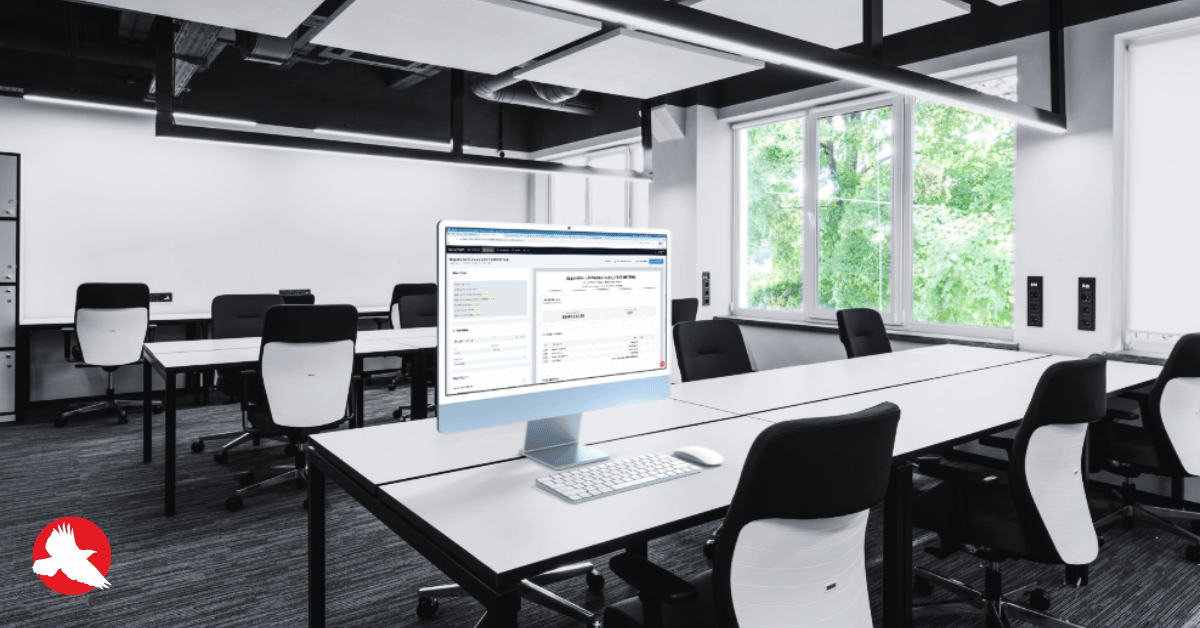
It was a high-fidelity clickable prototype simulating the experience of the future web application.
Stakeholders were able to:
The prototype helped leadership visualize how a future cloud-based platform could support estimating operations.
Using an AI-first Software Development Life Cycle (SDLC), Red Hawk rapidly generated interface components, structured backend logic, and evaluated architectural approaches for scalability.
This approach enabled:
The construction estimating software proof of concept was delivered in weeks — not months.
Client feedback reflected the impact:
“Red Hawk had done more in a few days than our previous partner did in four and a half years.”
By the end of the proof of concept phase:
The architectural direction also supported:
Leadership now had the clarity needed to proceed toward production development.
Next steps included:
By validating the direction early, the proof of concept eliminated guesswork before significant development investment.
Prototype approval confirms direction.
Scalable production requires structure.
Once a project moves beyond proof of concept, leadership must determine:
These decisions determine whether custom software becomes a long-term strategic asset — or an operational burden.
Most organizations choose one of two delivery structures:
Learn more about these delivery models:
After Prototype Approval: Choosing the Right Delivery Model for Production
Production readiness isn’t about writing code faster.
It’s about structuring delivery responsibly before the system goes live.
This proof of concept delivered more than interface validation.
It provided:
Replacing a legacy Microsoft Access application requires more than migrating technology.
It requires:
This is how organizations transition from legacy Access systems to scalable cloud applications — without unnecessary exposure.
If you’re evaluating:
Start with clarity.
Start with structured validation.
Start with a proof of concept designed to protect your investment before production begins.
Schedule a Strategy Conversation with Red Hawk Technologies
Build the workflow first.
Then build the software.