Hi Everyone,
Preparing for AI has quickly become a board-level conversation.
But the questions I get are less and less about technology. They’re more about confidence.
Can we trust our data?
Can we govern risk?
Can we scale without creating new complexity?
AI is powerful, but only when it is applied with discipline. In this issue of Streamline & Scale, we focus on what preparation really means: strengthening your data foundation, embedding governance, and applying AI where it creates measurable leverage.
AI shouldn’t create challenges and risks. It should help you streamline operations and scale performance.
When the foundation is strong, AI becomes infrastructure instead of experimentation.
Warm Regards,Matt StrippelhoffPartner, CEO/CRO - Red Hawk Technologies
Listen to our summary podcast that focuses on the highlights of Issue 10. Created with NotebookLM Enterprise.
This month, we explore three dimensions of AI readiness:
Unifying Insight: AI scales what already exists. If your systems are aligned and governed, it creates advantage. If they are fragmented, it accelerates friction.
Every executive meeting now includes the same question: “What’s our AI strategy?”
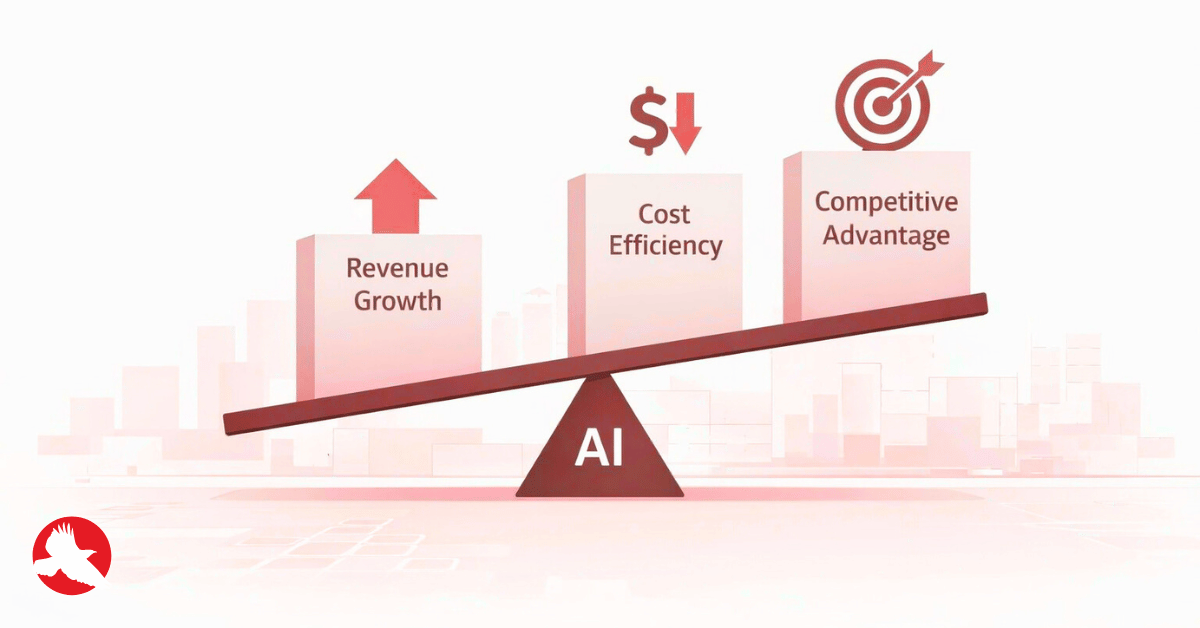
The better question is: “Where will AI create leverage?”
AI is not a product or a department. It is a category of capabilities that generate, predict, automate, optimize, and scale interaction. When tied directly to revenue growth, cost reduction, or differentiation, it becomes infrastructure inside the operating model instead of innovation theater.
Companies that beat their competition won’t be those that rush to adopt AI. The winners will take a strategic and measured approach, methodically embedding AI into standard operating procedures and workflows to maximize enterprise value.
Takeaway: AI becomes strategic when it is financially material and operationally embedded.

Mid-market companies rarely lack data.
They have a trust gap.
When leadership debates which number is right, data stops being an asset and becomes friction. Reports require reconciliation. Forecasts feel unreliable. Decisions slow down.
A data warehouse is not an IT vanity project. It is the mechanism that creates a single source of truth across finance, operations, sales, and marketing.
Here is the critical point for AI readiness:
AI doesn’t fix bad data. It produces faster and more confidently wrong answers when the foundation is flawed.
Takeaway: AI readiness starts with trust, and trust starts with aligned and governed data.
AI readiness is not only about growth.
It is also about protection.
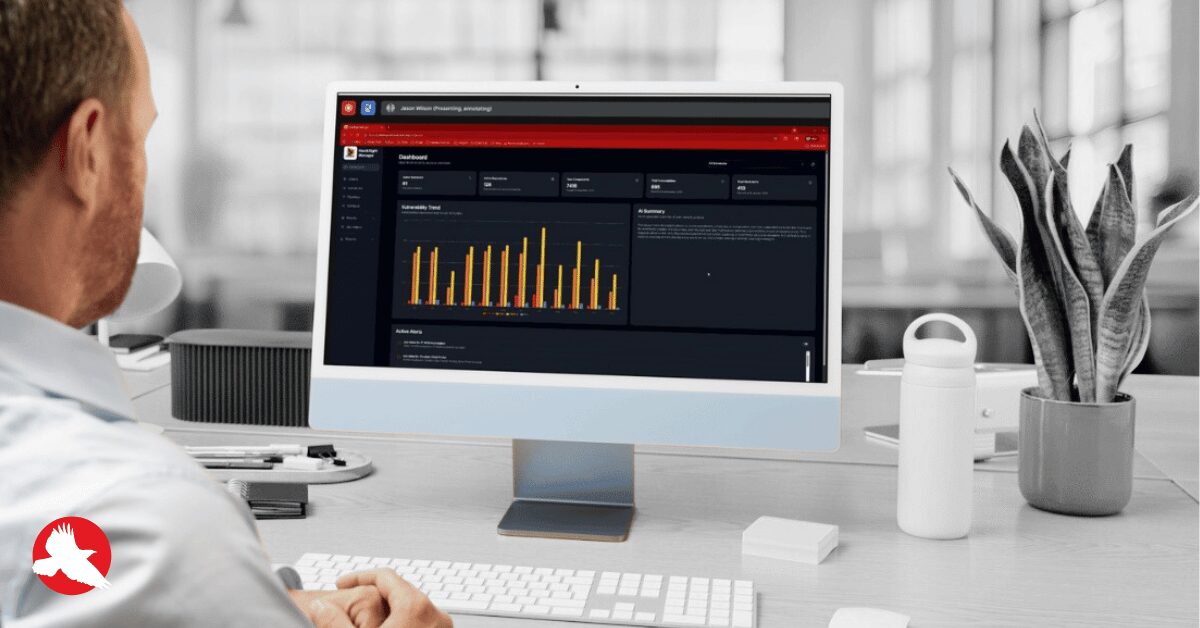
Open-source software represents one of the most common sources of application security exposure. Traditional SCA tools report vulnerabilities, but remediation is often delayed, fragmented, and manual.
That creates drift in your security posture.
AI handles the majority of source code fixes. Engineers validate and deploy. Governance-level visibility through SBOMs and continuous CVE monitoring creates measurable risk reduction.
Takeaway: AI readiness includes securing the software foundation that powers your business.
AI scales what you’ve already built.
If your data is fragmented, it scales confusion.
If governance is unclear, it scales risk.
If workflows are disciplined, it scales performance.
Streamline & Scale is not about adopting more tools. It is about aligning people, process, and technology so systems evolve together. When clarity comes first, AI becomes leverage.
If this issue sparked a conversation inside your leadership team, share it.
If you are evaluating AI initiatives or pressure-testing ones already underway, clarity matters more than speed.
Let’s focus on measurable impact instead of experimentation.
Over the next few issues, we will continue to focus on one of the most important foundations behind successful AI initiatives: data infrastructure.
Many organizations are rushing to adopt AI, but they’re discovering the same reality. AI projects often stall when the underlying data environment is fragmented, inconsistent, or built on tools that no longer scale.
In the coming issues, we will explore the practical side of building an AI-ready data foundation. We’ll look at why many AI initiatives fail without a data warehouse, how leadership teams know when they’ve outgrown spreadsheets and traditional BI tools, and how to prepare for a data warehouse initiative without wasting time or budget.
We’ll also share an executive guide to building a data warehouse that actually supports AI, along with the common mistakes mid-market companies make when trying to introduce AI before their data infrastructure is ready.
AI capability is only as strong as the data and systems behind it.
At Red Hawk Technologies, we're not just building software; we're building partnerships that drive innovation. We understand the unique challenges mid-market companies face when it comes to custom web and mobile application development – the unpredictable costs, the ongoing maintenance headaches, and the complexities of managing long-term projects.
That's why we've revolutionized the industry with our Software Development-as-a-Service (SDaaS) solution. We bundle development, technical support, ongoing maintenance, and future enhancements into a single, predictable monthly fee. This game-changing model eliminates uncertainty, provides financial clarity, and ensures your software evolves with your business, allowing you to innovate with confidence and focus on what you do best.
We believe in a partnership that helps you realize the potential of digital transformation. We're an award-winning team with a proven process for on-time, on-budget delivery, focused on helping mid-market businesses like yours achieve significant returns. Our Software Development-as-a-Service (SDaaS) model ensures predictable costs and comprehensive support.
Whether you're exploring a new vision with our Tech Innovation Workshops, seeking robust custom development, or need ongoing support for existing applications, we're here to provide the expertise and predictable partnership you need.
Once you've sharpened your software vision, the next step is transforming that blueprint into a powerful, custom application. We're here to help you bring that idea to life with predictability and precision.
Take the next step: Book a consultation to discuss your custom software needs.
We hope you found this first issue insightful. Look out for our next edition, where we'll dive deeper into the strategies for success in custom software development.
Get the earliest access to hand-picked content weekly for free.